
From 22 September 2025, most goods and services in India fall into two main GST rates – 5% and 18% – with a 40% rate for a short list of luxury and “sin” goods, and nil for essentials. Here is how the slabs work and how to calculate GST on any amount.
The main GST rates
| Rate | Typical examples |
|---|---|
| Nil | Fresh food, milk, certain healthcare and education services |
| 5% | Many daily-use and essential goods and services |
| 18% | The standard rate for most goods and services, including most professional services |
| 40% | Specified luxury and sin goods |
| Special rates | For example, 3% on gold and jewellery |
Rates are set by HSN code (goods) or SAC code (services). Always confirm the current rate for your exact item on the CBIC website – rates are revised by the GST Council.
How to calculate GST
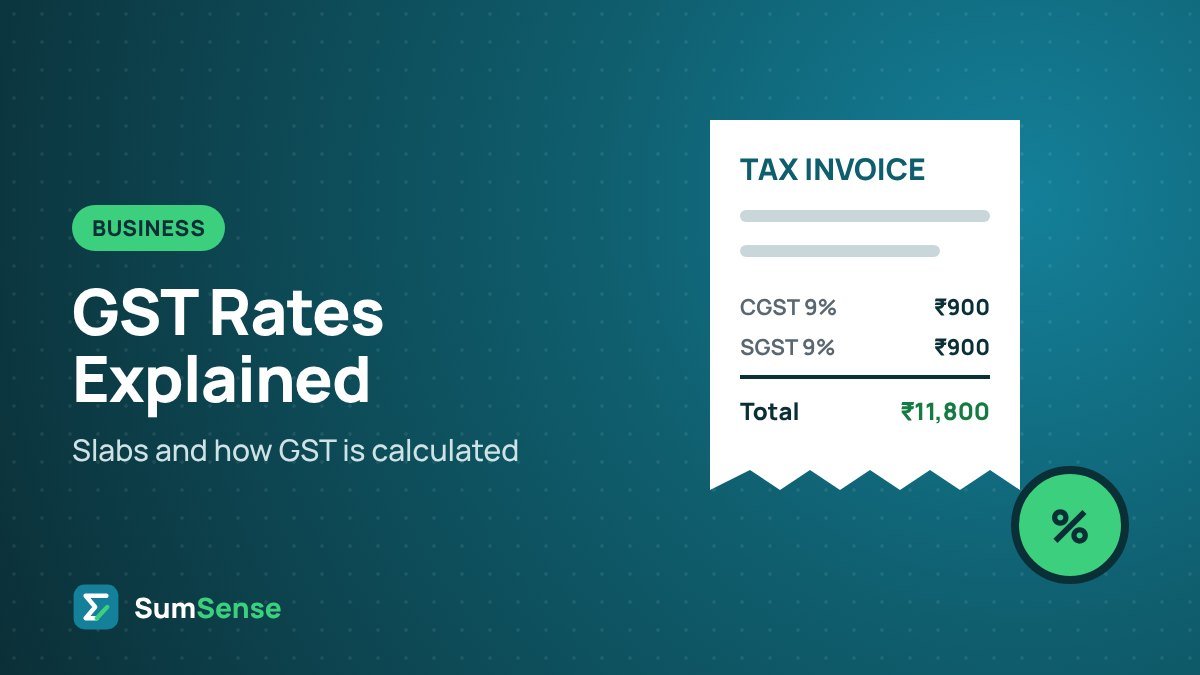
- Adding GST: GST = price × rate ÷ 100. A ₹10,000 service at 18% → GST ₹1,800 → invoice ₹11,800.
- Removing GST from a GST-inclusive price: base = price × 100 ÷ (100 + rate). ₹11,800 at 18% → base ₹10,000, GST ₹1,800.
Do it instantly with the GST calculator.
CGST, SGST or IGST?
| Supply | Tax charged | ₹10,000 at 18% |
|---|---|---|
| Within the same state (intra-state) | CGST + SGST, half each | CGST ₹900 + SGST ₹900 |
| To another state (inter-state) | IGST | IGST ₹1,800 |
What a GST invoice must show
- Your GSTIN and the buyer’s GSTIN (for B2B sales)
- Invoice number and date
- HSN/SAC code and description
- Taxable value, rate and tax amount split into CGST/SGST or IGST
- Place of supply
Small businesses
- Registration is generally required once turnover crosses the threshold for your state and type of supply.
- Eligible small businesses can choose the composition scheme – a lower flat rate on turnover, but no input tax credit and no tax charged on invoices.
Customer not paying the invoice? Read how to send a legal notice for payment recovery.