
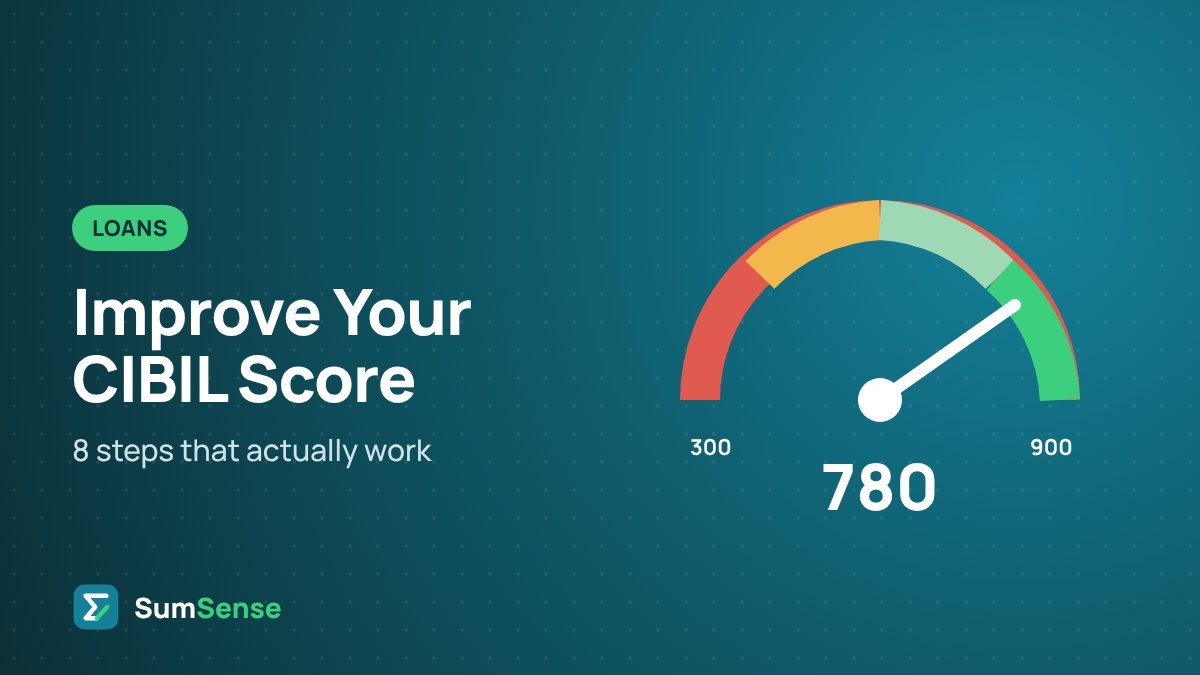
Your CIBIL score (300 to 900) summarises how reliably you have repaid credit. A score of 750 or above usually gets faster approvals and better interest rates. The good news: most of what drives it is within your control.
What affects the score
- Repayment history – the biggest factor. Even one missed EMI or card payment can pull the score down.
- Credit utilisation – how much of your card limits you use.
- Credit mix and age – a healthy mix of secured and unsecured credit, and older accounts, help.
- New enquiries – many loan or card applications in a short time hurt.
8 steps to improve it
- Never miss a due date. Set up auto-debit for at least the minimum due on cards and full EMIs on loans.
- Keep card usage below 30% of the limit. On a ₹1 lakh limit, try to keep the statement balance under ₹30,000.
- Pay the full card bill, not just the minimum. Card interest is typically 36–45% a year.
- Do not close your oldest card without reason – it lengthens your credit history.
- Space out applications. Check eligibility first with the loan eligibility calculator instead of applying everywhere.
- Prefer “closed” over “settled”. A settled account signals the lender took a loss and can stay on your report for years.
- Check all four bureau reports – CIBIL, Experian, Equifax and CRIF High Mark. You are entitled to one free full report a year from each.
- Dispute errors. Wrong late payments or loans that are not yours can be fixed – see our CIBIL dispute guide.
How long does it take?
Lenders now report to credit bureaus at least every fortnight under RBI rules, so good behaviour shows up faster than before. Typically:
- Lower card utilisation can lift the score within one or two billing cycles.
- Recovering from missed payments usually takes 6–12 months of clean history.
- Corrected errors should reflect after the bureau resolves the dispute – RBI rules set a 30-day timeline, with compensation for delays.
No credit history yet?
Start small: a credit card against a fixed deposit, used lightly and paid in full every month, builds a record within 6–12 months.